The Display That Remembered Itself
The Ferranti-Packard flip-disc display held its picture with zero power — and only drew energy when the picture had the audacity to change. A screen that thought, and cost nothing to keep thinking.
Nearly every screen in this museum is a liar about memory. A cathode-ray tube paints its picture thousands of times a second and forgets it just as fast; the moment you stop refreshing, the phosphor goes dark and the thought evaporates. A plotter like the Commodore 1520 finishes one drawing and then is done, a sheet of ink that has to be protected from the world. These machines do not remember — they rehearse, endlessly, or they give you a physical thing and hope you keep it safe.
The Ferranti-Packard flip-disc display (1976) remembered all on its own, and it cost nothing to do so.
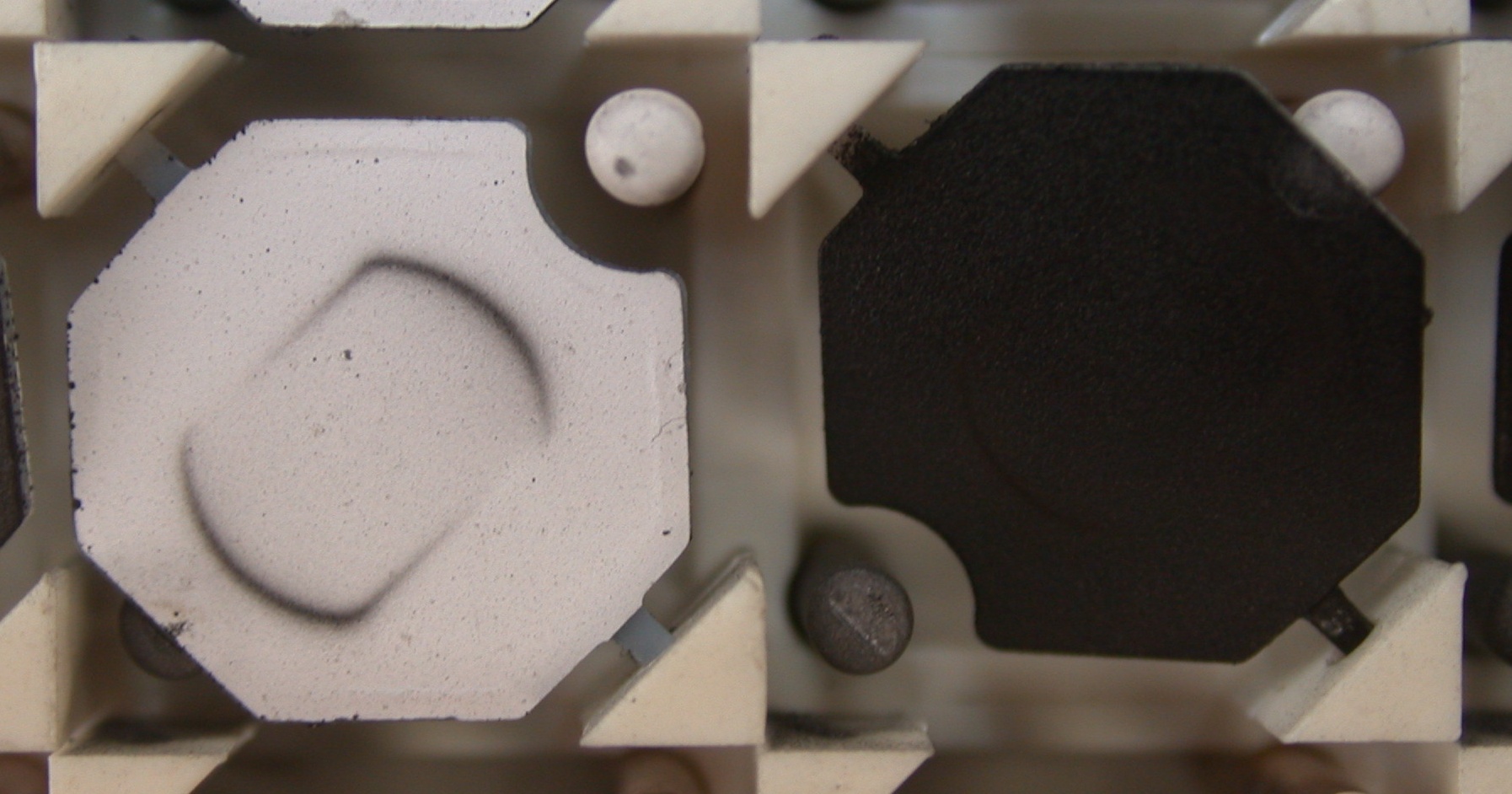
Every pixel here is a small metal disc — bright on one side, a dark color on the other — mounted on an axle and cradled by a permanent magnet. To change a pixel you fire a solenoid coil beside it; the magnetic field snaps the disc over 180 degrees to show the other side. Then the latch takes over. The disc stays put under its own magnet, indefinitely, with no electricity at all. A million discs painted once, and the whole board holds the answer without a watt.
That single property — bistable, self-latching, persistent at zero power — is the entire philosophy, and it inverts the cathode-ray bargain completely. A CRT spends its whole life spending energy just to be the same. The flip-dot spends energy only to be different.
This is why it filled the places that had to be right all the time but could not afford to be on all the time: the departure boards of train stations, the variable-message signs on motorways, the towering stock-exchange tickers where thousands of digits had to sit unblinking through a trading day. There was no refresh to worry about, no flicker, no phosphor burn-in — just a wall of discs that said one thing and kept saying it until the facts changed.
And when the facts did change, the display told you by making a sound. Flip a hundred discs at once and you get a soft thunder of tiny latches — a mechanical sigh that ripples across the board as the image mutates. The stock ticker didn't just show you the new numbers; it announced the edit. You could stand with your back to the board and still hear the market move. That is feedback no CRT of the era offered, because a CRT never needed a sound to tell you it was doing something — it was always doing something, ceaselessly, just to hold still.
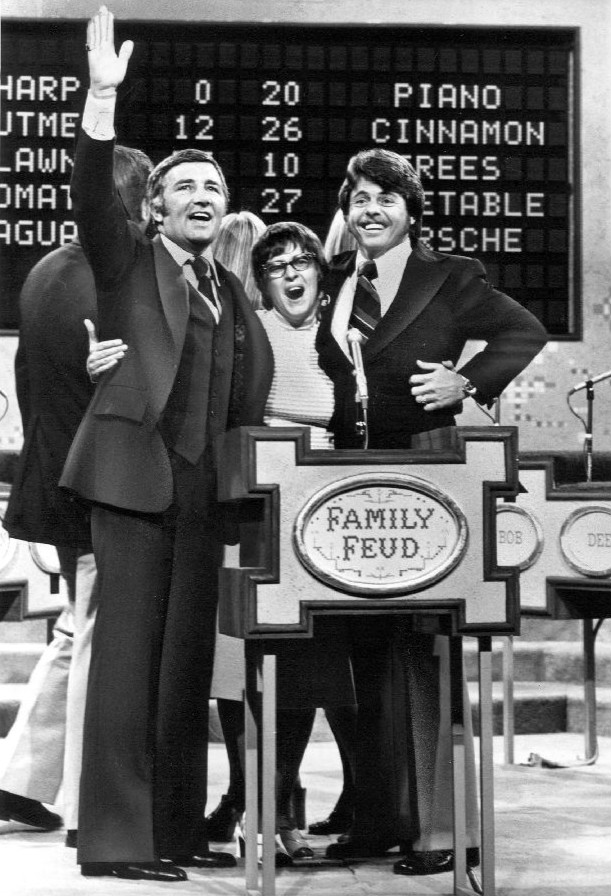
The strangest cultural moment of the flip-dot's life was the Family Feud answer board from 1976. Here the display stopped being infrastructure and became a performer. A host tapped a panel and a cascade of discs flipped open with that signature clatter, one letter at a time, building the answer in front of a live audience. The board was a participant — the mechanical reveal was as much the show as the answers themselves. Millions of people watching at home learned that a screen could be rhetorical: it could time its reveals, pause on a guess, flip one skeptical disc at a time. It was a display with a sense of timing.
Each output device in this museum takes a different stance on what a screen owes you. The GE Talaria carves its picture fresh from oil every instant, a sculpture perpetually in motion. The Honeywell Visicorder hands you a latent trace to develop in the dark, saving your faith for the wet film. The flip-dot refuses both bargains. It holds one good thought, for free, until you teach it a better one — and it has the decency to make a little thunder whenever it changes its mind.
The Gyricon shares the faith, as every bistable display in this place does: that the cheapest way to keep an image is to build it out of parts that remember on their own. But the flip-dot was the one that learned to shout. A screen that thought — and charged you nothing to keep thinking, only to change.