The Knob That Changed Its Job
Harrison's SeriesTEN (1988) traded the wall of dedicated pots for a few software-assignable knobs per channel, so the same physical control could be gain now, an EQ band next, a send after that — the meaning of a knob left the printed panel and moved into the machine's memory, a few physical controls carrying many software-defined jobs.
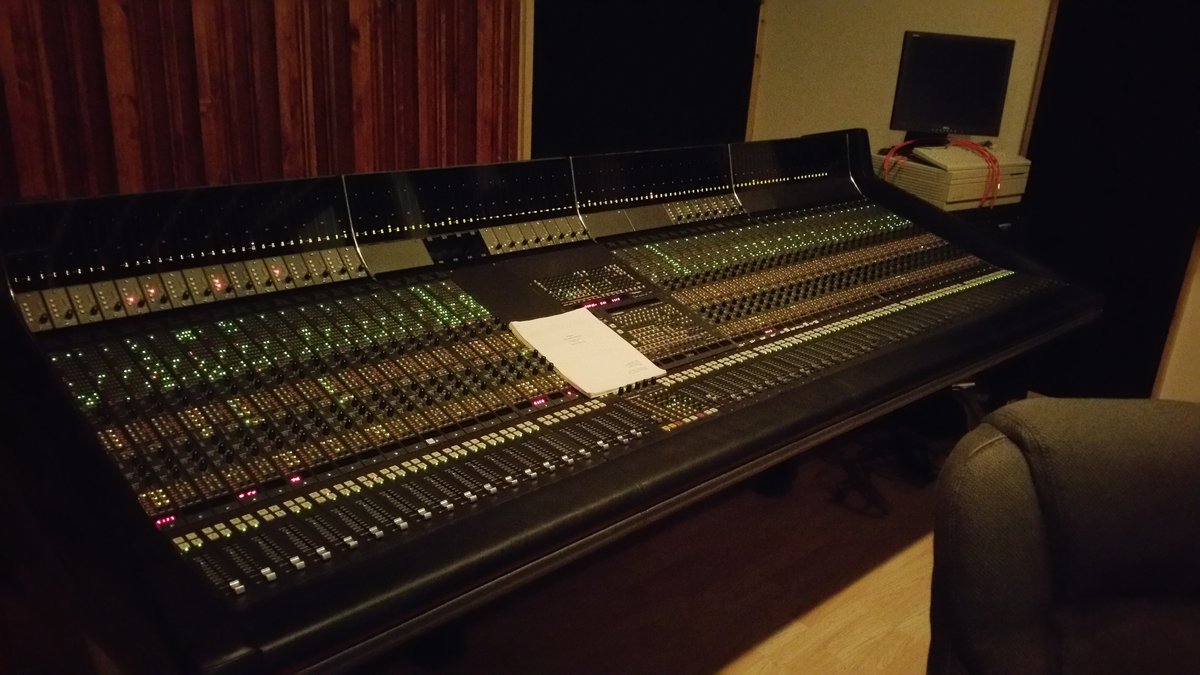
A knob has always been an honest thing. On a mixing console, you know what a knob does because the panel says so, in ink, next to it: GAIN, EQ, SEND, PAN. The label is printed once and never lies. Twist the knob and the thing it promises happens. That was the contract for a hundred years of audio — a physical control, a printed name, a fixed job.
In 1988, Harrison SeriesTEN tore up that contract. It is widely called the world's first digitally controlled analog console with automation, and its strangest feature was not that a computer ran the desk. It was that the knobs stopped having permanent jobs.
The SeriesTEN gave each channel strip only a few physical controls, and let the software decide what each one meant at any moment. The same knob could be gain right now, an EQ band a moment later, a send level after that — with the current assignment read from the console's display rather than from ink on the panel. The panel stopped telling you what the knob did. The machine did. And the machine could change its mind.
That is the interaction model this museum is built to stop and stare at. For the entire history of the control surface up to that point, meaning lived in the hardware — engraved, silkscreened, fixed for the life of the desk. The SeriesTEN moved meaning out of the hardware and into the computer's memory, where it could be swapped on demand. The physical object did not change; the job it did changed. A knob became a shape you reached for, and the name it answered to was whatever task you had told the desk you were editing.
It is worth reading this against its direct sibling, the SSL SL 4000 (1979), which sits a few cases over in this museum and is the exact opposite answer to the same 1980s problem. SSL kept every single pot on the board — hundreds of them, fixed and labeled — and its Total Recall automation saved all their positions, then lit a display telling the engineer to walk the length of the desk and physically re-turn each knob until it matched. Machine remembers; human restores. Harrison looked at the same wall of knobs and asked why it existed at all. Instead of motorizing or guiding a hundred pots, it collapsed them into a few assignable ones. The SSL desk kept the hardware and put the intelligence in the instruction book. The Harrison desk kept a handful of controls and put the intelligence in the computer.
These two consoles are the fork in the road. SSL said: the surface stays, the memory is the problem. Harrison said: the memory is easy, the surface is the problem — so make the surface smaller and let the software own the labels. Both were right about a future, just different futures. Modern recording software — the plug-in era, the DAW, the single hardware bank of knobs that controls whatever the cursor happens to touch — is unmistakably the Harrison lineage. Your phone's screen is a Harrison console: a few surfaces, endlessly reassigned. Even the humble multifunction mouse button, or a trackpad that scrolls here and zooms there, descends from the decision to stop engraving meanings into plastic.
The quiet drama of the SeriesTEN is what the engineer gave up. On an analog desk, the layout is a memory aid: the positions of gain and EQ and sends are baked into the geometry of the panel, so a seasoned hand finds them without looking. The SeriesTEN asked you to look at a screen to learn what your hands were touching. It traded the legibility of a fixed map for the flexibility of software. That trade — the meaning of your hands now depends on what the machine thinks you're doing — is the price of every assignable interface, and the SeriesTEN is where a generation of audio engineers first paid it.
The console's signal path stayed analog, fully analogue to the ear; only the control surface was digitized. So the SeriesTEN is not a computer pretending to be a desk. It is a desk pretending the desk part is negotiable — an honest analog console that hired a computer to manage the least honest part of itself. Few physical controls, many software-defined jobs, and a knob that changes its name the moment you ask it to. The museum will always keep a case for the artifact that first proved a control's meaning can live in software instead of ink.