The Row Boat That Played Video Games
In 1986, Bally built a commercial rowing machine with a built-in color CRT and two video games. The rowing motion was the controller.
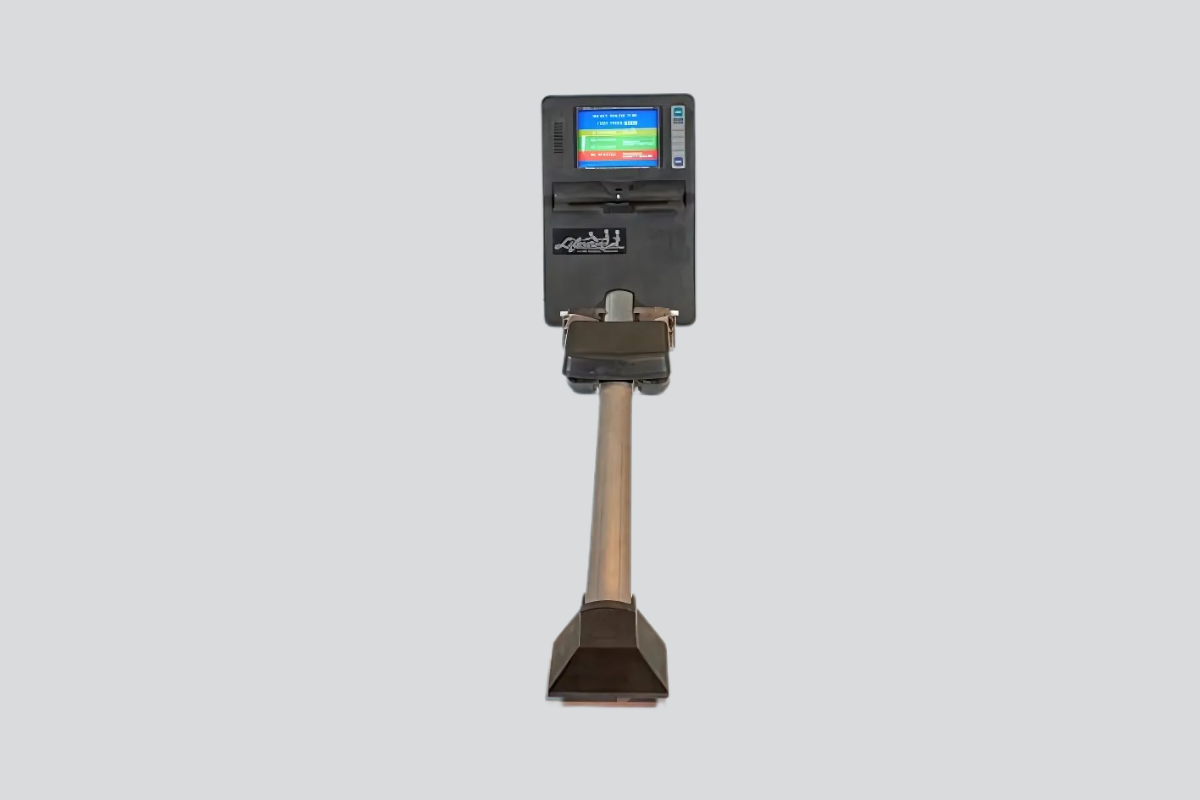
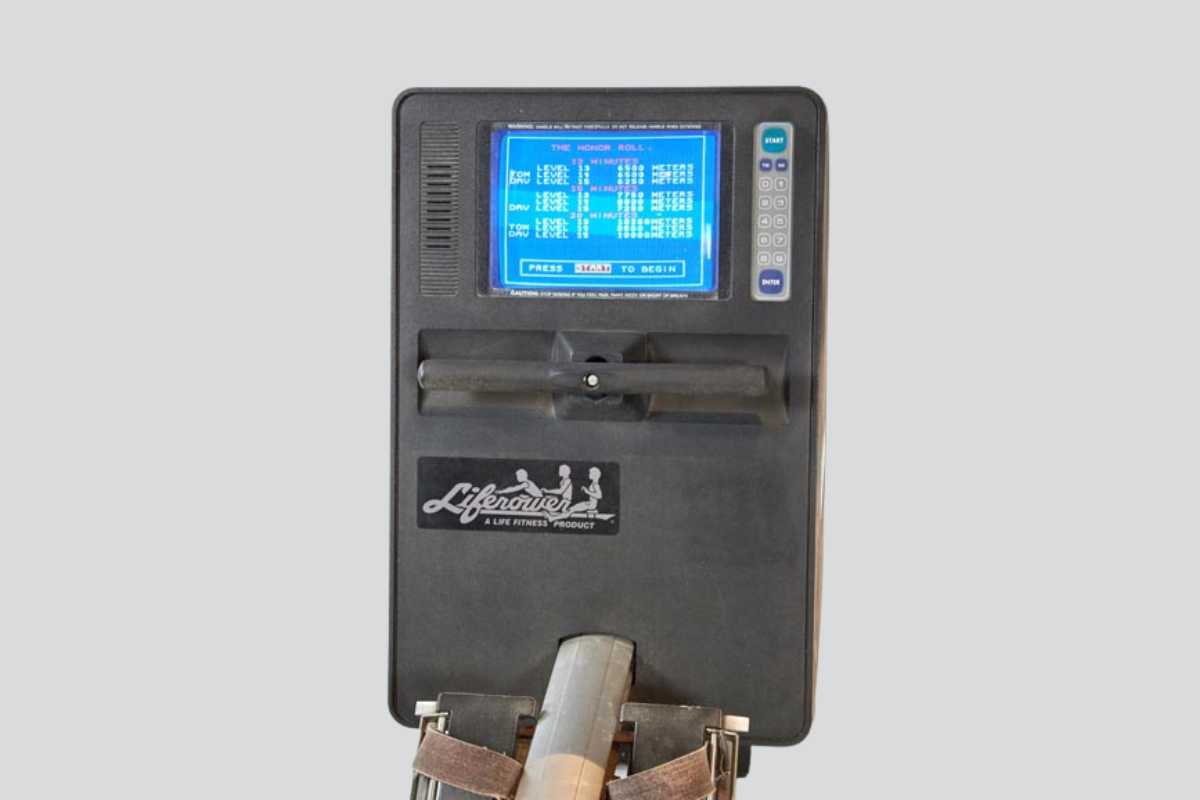
In 1986, if you walked into the right commercial gym, you might have found yourself sitting at a rowing machine with a color CRT monitor built into its faceplate, staring at a boat labeled "YOU" scrolling past buoys and cityscapes while crowd cheers piped through a 3x5-inch speaker. You pulled the handle against magnetic resistance, and the boat moved faster. You eased up, and it slowed. An on-screen dashboard tracked your stroke rate, calories, and distance. A starting-gun animation with nautical bells and text commands kicked off each race. If you got bored of racing, you could switch to Shark Chase, where the point was to row fast enough that a shark did not eat you.
This was the LifeRower, and it was not a prototype. It was a real commercial product, sold by Life Fitness, the fitness division of Bally Manufacturing Corporation. Yes, the same Bally that brought Pac-Man to American arcades — now building a gym machine with a built-in video game system, thirty-five years before anyone had heard of Peloton or Ring Fit.
A gym machine with a game console inside
Bally did not just bolt a TV onto a rowing machine. They built a full computer inside it. The LifeRower ran on a Motorola 6809 microprocessor — one of the most advanced 8/16-bit CPUs of its era — backed by ROM chips storing program code, animation frames, and sound data. A Texas Instruments TMS9918-family video chip drove the color CRT at 256x192 pixels with 15 colors. A General Instruments sound chip pushed audio through the speaker. There was a German-language version, which means somebody in Germany was also rowing away from sharks.
The rowing mechanism itself was the controller. Two independent sensor systems measured the user's effort. An optical encoder — a notched wheel passing through a photointerrupter — generated pulses whose frequency tracked shaft RPM, which directly determined the on-screen boat speed. A mechanical microswitch, triggered by a cam on the cable drum, detected the start of each stroke, synchronizing the animated rower on screen with the actual human motion. Resistance came from a magnetic particle brake capable of constant torque at any speed, adjustable in 10-milliamp increments by the microprocessor. If you were on the return portion of a stroke, the system could ease up. A cast-iron flywheel with a one-way clutch simulated the coast of a real boat between pulls.
This is not exercise equipment with a timer slapped on. This is an engineered game input system where your sustained physical exertion maps continuously and proportionally into a virtual world. The machine reads not just how hard but when you are pulling, and responds in real time.
The games nobody remembers
The LifeRower had two built-in games. Pacer was a competitive boat race: your boat against a computer-paced opponent, scrolling through a waterway with parallax-scrolling shorelines — near and far, moving at different rates — against a cityscape background with mileage signs. Twelve difficulty levels gave you races from one to twenty minutes. The dashboard showed stroke rate, calories, distance, and boat lengths ahead or behind. There was a pre-exercise tutorial with step-by-step animated text prompts demonstrating proper rowing form.
Shark Chase was simpler and more urgent: maintain a steady pace, or the shark catches you.
These were not afterthoughts. They were the entire point. The games were the interface between your body and the workout — not a distraction from exercise, but a way to make the exercise itself legible, competitive, and weirdly fun.
The arcade company that built a gym
The LifeRower came from Bally Manufacturing, the Chicago company best known for arcade games, pinball machines, and casino operations. The LifeRower was part of a small family of exergame products cooked up inside Bally: the LifeRacer, an exercise bike with a racing game, followed in 1989. The LifeRider, a two-player arcade exergame cabinet, was prototyped at Bally Sente but never released. All six inventors named on the 1987 patent worked for a company that also made slot machines.
One of those co-inventors, Augustine Nieto, would later become CEO of Life Fitness from 2007 to 2017, then found Ergatta, a modern connected-fitness startup that makes — you guessed it — a rowing machine with built-in gaming. The arc bends toward exergaming, apparently.
Only one LifeRower is known to survive. It sits in the National Videogame Museum in the UK, accession number SHEVG.2024.11. The museum preserves the history of video games. That a rowing machine belongs there tells you what the LifeRower actually was.
The long road from 1986 to the smart trainer
Connected fitness feels recent: Peloton screens, Zwift virtual courses, the Apple Watch closing its rings. But the core idea was already working, commercially, in 1986: measure physical exertion continuously, map it into a virtual world in real time, and use game dynamics to make people push harder. The LifeRower just lacked the internet, which meant your Pacer rival was a CPU, not a stranger in Berlin.
The machine looks like gym equipment from an era that did not yet know it was building the future. But that color CRT, mounted at eye level above the footrests, with its scrolling water and dashboard readouts and the word "YOU" on a little boat — that was the future, arriving early and quietly, in gyms where nobody knew they were looking at it.