Luma LU-1000 Lumaphone
A $1,500 desk phone that transmitted a single still photograph every few seconds over an ordinary phone line
Overview
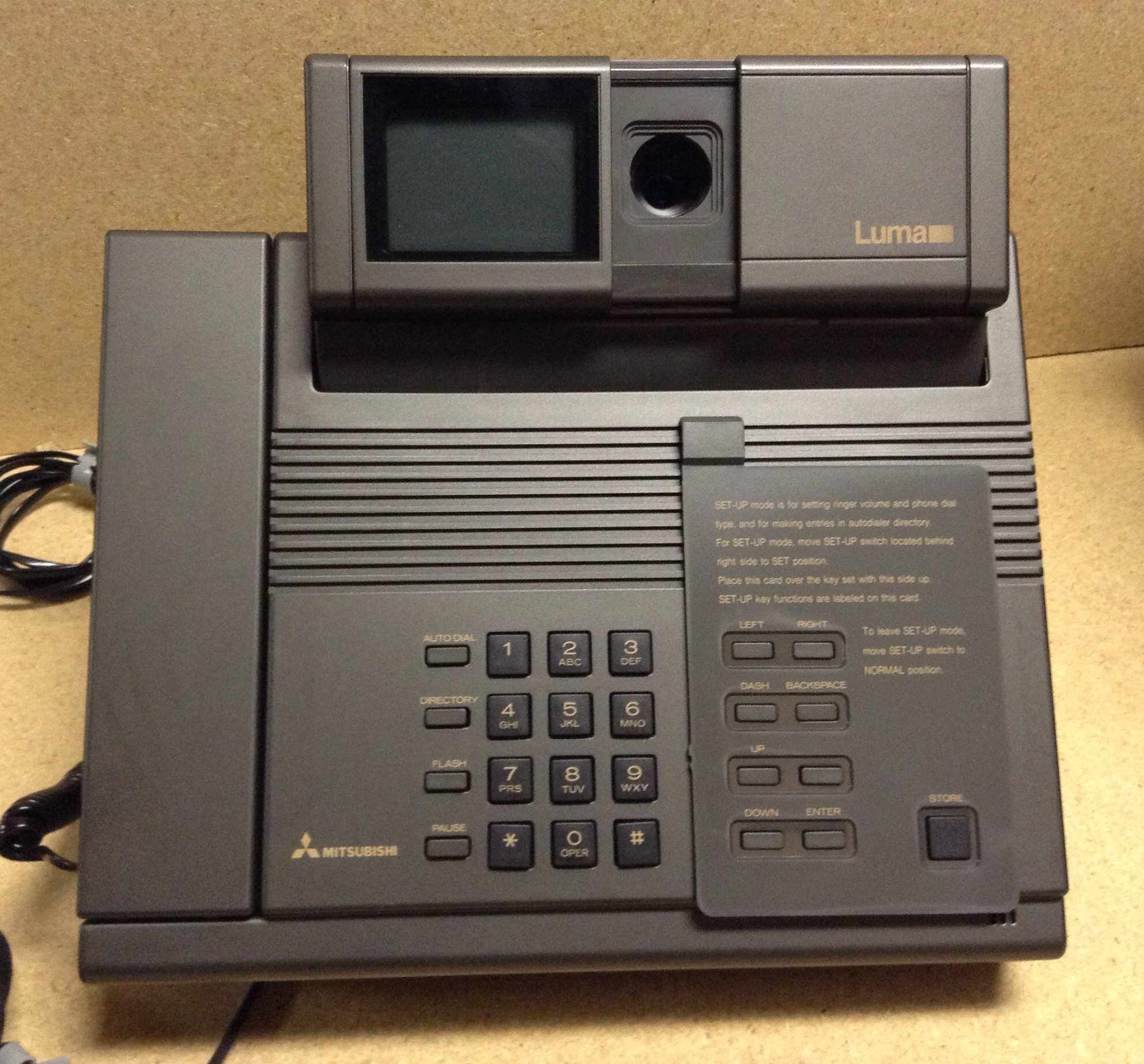
The Luma LU-1000, marketed in 1986 for about $1,500, was a desktop telephone-videophone that could not actually stream video. Over an ordinary analog POTS phone line it transmitted a single still image every three to five seconds — a picture-by-picture cadence like a slow-motion slideshow, descended from Bell Labs' experimental image-transfer telephony of 1956.
The unit packed a tiny black-and-white CRT (roughly 1.6 inches) with a small camera beside it. You lifted the handset, dialed normally, and the far end's face refreshed in discrete still bursts. The most embodied detail is a physical sliding privacy door that slides over the camera lens to block it when not in use — a tactile shutter deciding whether the other person could see you. The Luma doubled as an electronic still camera: images could be stored to tape drives, printed on a dedicated printer, or patched into a TV for teleconferencing.
The device is notable commercially for its strange parentage: the project began in 1983 at Atari's short-lived Ataritel division (Atari's attempt to enter telephony), which was sold to Mitsubishi in 1984. A consumer picture phone that stalled on the plain old telephone line's bandwidth, it is the commercially-odd sibling of AT&T's VideoPhone 2500 (1992), which achieved real moving video over the same lines six years later.
Deep dive
Where the 1992 AT&T VideoPhone 2500 managed compressed video, the Luma shipped the older compromise: one still picture every few seconds. That cadence changes the whole social texture of a call — you get snapshots, not motion, and each one is a deliberate present. It is a videophone that reads like a fax of a face.
The camera had a physical sliding door. Sliding it shut was a real, embodied decision about being seen — the closest a consumer device came to a hardware "do not film me" that only the later keyboard-mounted webcam covers and the iris shutter on some laptops ever revisited. The affordance is tactile and permanent, not a software toggle.
The Luma's roots in Ataritel, Atari's 1983 attempt to expand into telephone hardware before the home-computer crash, give it a strange commercial story: a videophone conceived inside the arcade-and-console giant and finished by Mitsubishi. The "picture phone" that could not move was a plausible product only in that brief, weird window.
Team & pioneers
- Ataritel (Atari). Originated the project c.1983 as part of Atari's push into telephony.
- Mitsubishi Electric of America. Acquired the Ataritel project in 1984 and sold the finished Luma LU-1000 in 1986.
Media