ROLM CBX / RolmPhone 400
The first digital PBX whose desk phone had no switchhook — a magnet in the handset was the button, and its keys were software
Overview
The ROLM CBX (Computerized Branch Exchange) was the first fully digital computerized telephone switching system, built around a general-purpose ROLM 1603 minicomputer — a militarized Data General Nova derivative running the phone switch in software. It was a radical departure from the electromechanical and crossbar PBXs that preceded it: call routing, features, and network provisioning all ran in software on a real computer.
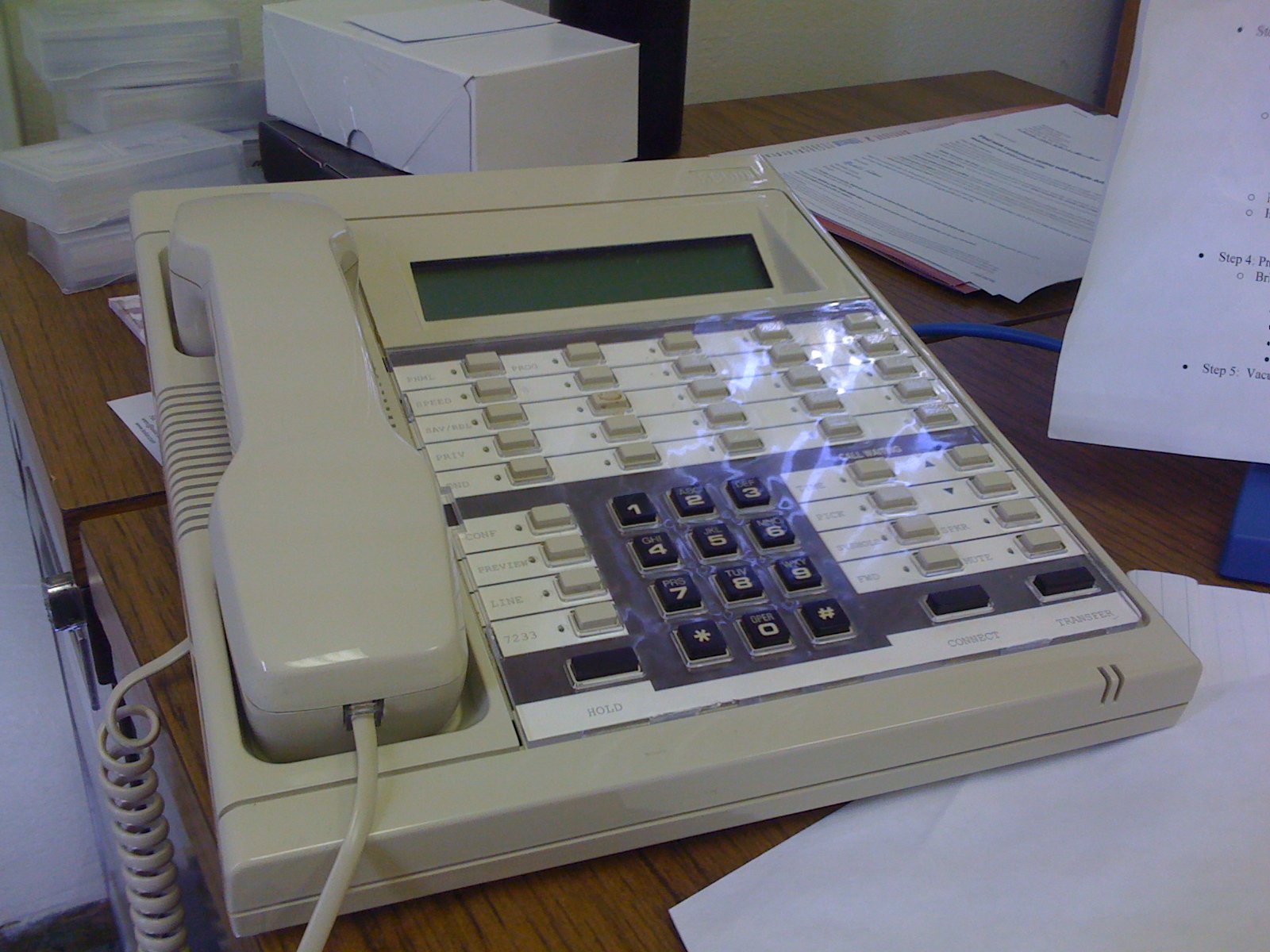
With the CBX, ROLM introduced the RolmPhone digital telephone line. The RolmPhone 400 (RP400) was the flagship, named for its 40 programmable feature/line keys. Those keys were not hardwired to specific telephone lines — they were software-reconfigurable from the CBX switch, letting the phone be reprogrammed remotely. This is arguably the first mass-market example of soft keys on a telephone. And most strikingly, the RolmPhone had no physical switchhook button at all: a tiny magnet embedded in the handset and a reed switch in the base meant the very presence or absence of the handset in the cradle was the on/off mechanism. Lifting the handset broke the magnetic field; setting it down closed the circuit. The handset was the button.
Deep dive
Before the CBX, switching was electromechanical or analog. ROLM's use of a general-purpose minicomputer meant the switch became a programmable computer and every phone on the network became a programmable terminal — enabling call forwarding, conference calling, and PhoneMail, one of the first commercial voicemail systems.
The absence of a physical switchhook was deliberate. A permanent magnet in the handset and a reed switch in the base meant the phone's most fundamental mechanical gesture — lifting and replacing the receiver — was sensed magnetically, with no spring-loaded button to wear out. On-hook and off-hook state became a property of the handset's physical position.
The RP400's 40 keys were not wired to lines; each was a programmable button whose function the CBX switch assigned. Line assignments, speed-dial numbers, and feature access could all be changed remotely. A paper label strip let users write each key's function. Only the two volume buttons were fixed. This is a direct ancestor of the soft keys and reconfigurable buttons on modern VoIP phones and smartphone interfaces.
The telephony family runs acoustic-to-digital: Novation CAT (acoustic coupler), Hayes Smartmodem (programmable modem), Minitel and TI Silent 700 (terminals), AT&T VideoPhone 2500. The ROLM CBX / RolmPhone adds the switching side and, more importantly, the soft-key telephone — a digital desk phone whose keys are software and whose hook is a magnetic field.
Team & pioneers
- Gene Richeson. ROLM co-founder.
- Ken Oshman. ROLM co-founder, CEO.
- Walter Loewenstern. ROLM co-founder.
- Robert Maxfield. ROLM co-founder.
- Leo Chamberlain. Key early employee, architect of ROLM's celebrated "Great Place to Work" culture.
Media